Commercial Waste Removal Wembley: Recycling and Sustainability
Our Wembley commercial waste removal service is committed to creating an eco-friendly waste disposal area that supports local businesses and the wider community. We combine practical collection systems with a clear sustainability mission, focusing on reducing landfill, improving recycling rates, and promoting a sustainable rubbish area across the borough. By working with local authorities and neighbourhood partners we align commercial waste removal in Wembley with the borough's wider environmental objectives.Our Sustainability Goals and Recycling Percentage Target
We have set an ambitious recycling percentage target to drive measurable progress: 70% recycling and reuse of commercial waste by 2030. To reach that goal we deploy targeted segregation at source, improved sorting at transfer points, and reuse pathways that divert materials from landfill. In the short term we aim for a 50% uplift in recyclable capture within the next three years through business engagement, waste audits, and incentives for high-quality separation. These percentages reflect our commitment to making the Wembley commercial waste removal ecosystem greener and more resilient.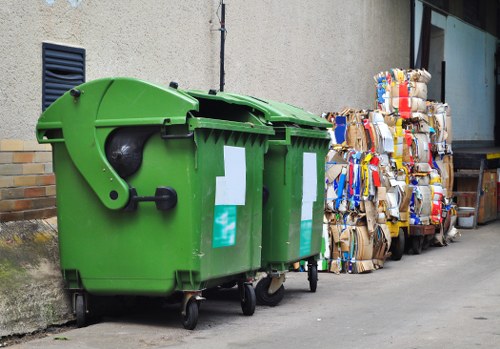
Operational Measures for an Eco-Friendly Waste Disposal Area
To build a practical and verifiable eco-friendly waste disposal area we implement lightweight, scalable measures: clear labelling for segregation, scheduled collections that reduce idling, and dedicated routes for recyclable streams such as paper and card, glass, plastics, metals and food waste. We support the borough's approach to waste separation, which increasingly emphasises separate food waste collections, dry mixed recycling and dedicated construction waste streams for building sites and retail refurbishments.Our sustainable rubbish area strategy also includes targeted interventions for common commercial waste types. For offices and retail units we prioritise source-separated paper and cardboard, while hospitality and catering clients receive food waste and plateware recycling options. For construction and demolition projects we use segregated containers to capture inert material, wood, plasterboard and metals, which facilitates recovery and reduces contamination rates in the recycling circuit. Every step is designed to keep materials clean and valuable for reprocessing.
 We work closely with local transfer stations and materials recovery facilities (MRFs) to ensure that separated streams are handled responsibly. Collections from Wembley are routed to nearby transfer points in Brent and neighbouring boroughs, ensuring minimal travel distance and faster processing. Local transfer stations play a critical role in lowering carbon intensity by consolidating loads and enabling direct delivery to specialist recyclers — a core part of any low-impact commercial waste removal in Wembley.
Partnerships with charities and social enterprises extend the life of many items that would otherwise be discarded. We collaborate with a range of organisations — from furniture reuse charities and clothing banks to food redistribution partners — to channel usable goods back into the community. These alliances support circular economy principles and provide social value: donated furniture, appliances and surplus food frequently find a new home rather than heading to a disposal site.
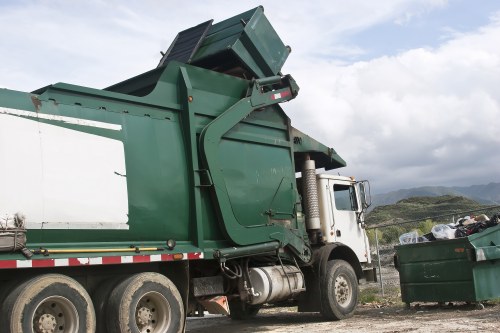
To reduce the carbon footprint of collection journeys we are expanding a fleet of low-emission vehicles. Our low-carbon vans include electric vehicles (EVs), plug-in hybrids and Euro 6 compliant models for heavier routes. Route optimisation software and consolidated collections allow us to run fewer miles while maintaining reliable service, making sustainable rubbish area management more cost-effective and climate-friendly. The move to EVs is a central feature of our plan for long-term decarbonisation.
 We emphasise transparency and traceability across the waste chain. For clients requesting detailed reporting, we provide breakdowns of tonnages, recycling rates and destinations for key waste streams. This data helps businesses demonstrate compliance with local regulations and sustainability commitments and supports broader borough-level reporting where commercial waste performance contributes to municipal recycling targets.
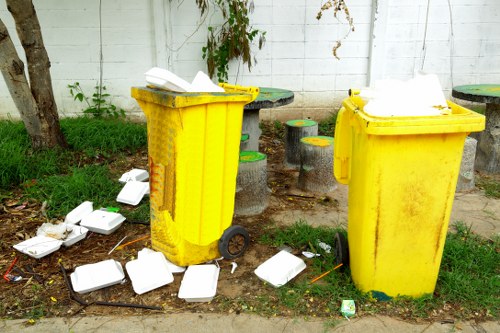 How we support businesses and the borough:
- Source segregation training to lower contamination and improve recyclable quality.
- Dedicated collection schedules tailored to business footfall and waste generation cycles.
- Direct transfer partnerships with nearby stations to increase recovery rates.
- Charity and reuse links for furniture, textiles and surplus food to maximise reuse.
- Investment in low-carbon vans and route consolidation to cut emissions.
We also champion site-level improvements that create a lasting sustainable rubbish area. Simple adaptations such as clear signage, colour-coded bins, and indoor sorting points reduce contamination and make recycling a routine part of daily operations. For larger commercial estates we can design dedicated recycling hubs that serve multiple tenants and reduce the need for frequent on-call collections, further lowering vehicle movements and enhancing the overall eco-friendly waste disposal area footprint.
Engaging with the local borough's waste separation guidance is central to our approach. The Wembley area and Brent council emphasise separate food waste collection, glass, and dry mixed recycling for households and businesses; we mirror these practices in our commercial collections to ensure compatibility with municipal processing streams. Aligning commercial waste removal in Wembley with the borough's systems reduces contamination and increases the likelihood that materials reach the right recycler.
By combining measurable targets, strong local partnerships, investments in low-carbon vans and a focus on reuse with charities and community groups, we create a practical, high-performance model for sustainable commercial waste handling. Our aim is to make the transition to a greener commercial waste removal landscape in Wembley as straightforward as possible for businesses, while delivering verifiable environmental benefits for the neighbourhood and future generations.